New Suspension Rods Did Not End the Ur Error
A Samsung top-load washer was calibrated after new suspension rods and looked nearly steady during an empty spin. The Ur error still returned in the customer's laundry. The useful lesson was to stop treating Ur as a one-part fault and test the machine as a mechanical and drive-control system.
The short answer
After suspension work, verify installation and leveling, run the exact model's calibration, inspect basket play and runout, and reproduce the complaint with a small controlled load. Only then move into sensor, harness, inverter and control-board branches.
A similar symptom can have a different cause on another washer. Ur describes what the controller observed during load distribution; it does not identify one universal failed part.
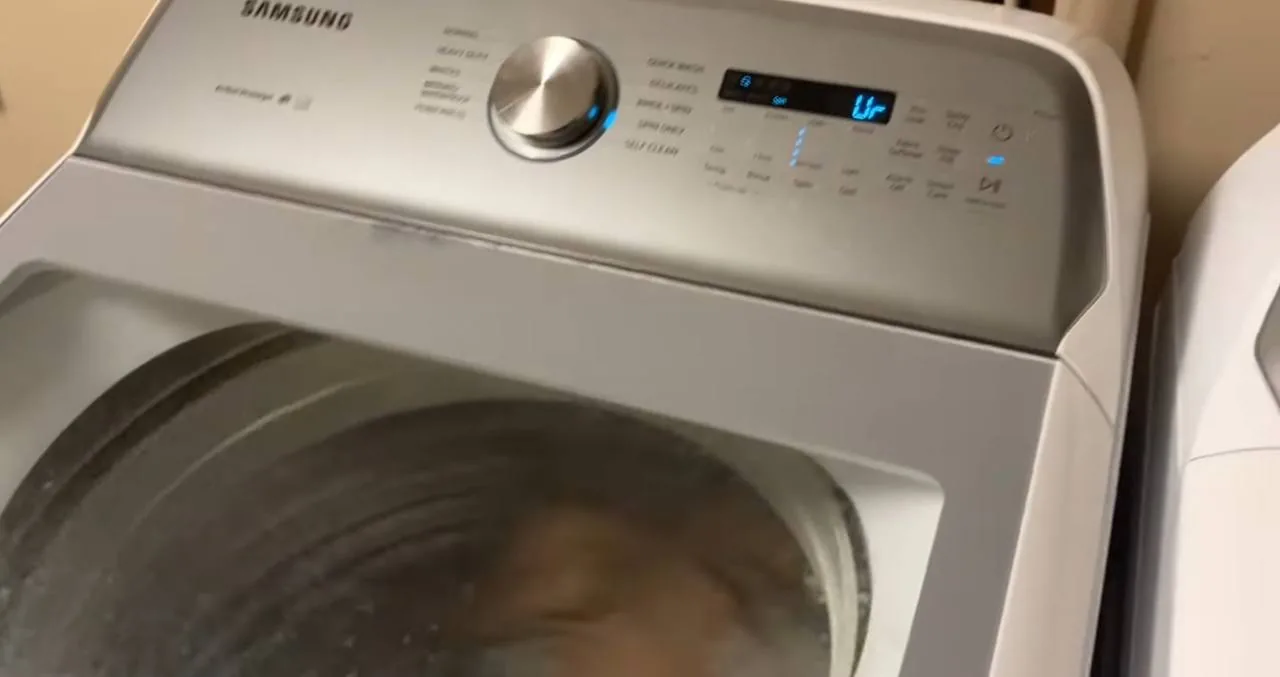
What had already been tried
- The suspension rods were replaced.
- The washer's calibration routine was run.
- The basket was observed during spin and did not show dramatic shaking while empty.
- The technician considered a Hall or rotor-position sensor.
- The washer later produced the Ur complaint again under the customer's normal use.
The last observation matters most: a quiet empty spin did not reproduce the conditions that caused the complaint.
Four things that are easy to confuse
Suspension rods
They control tub movement. New rods cannot correct a bent basket, shaft play, poor installation or a control fault.
Rotor-position feedback
It reports motor position and speed. That role is not the same as a dedicated vibration sensor.
Imbalance logic
An inverter-driven washer may infer load behavior from the drive system as well as model-specific sensors.
Fluid-filled balance ring
Liquid inside the ring can be intentional; it shifts to counter the heavy side of a moving load.
A test order that preserves evidence
- Record the complete model suffix and when Ur appears.
- Confirm that the cabinet is stable and level and that all feet carry weight.
- Inspect the installed rods, basket play, shaft movement and visible runout.
- Run only the calibration procedure documented for that exact model.
- Use a repeatable load, such as several wet towels, to reproduce redistribution and spin.
- Compare the observed sequence with the service information before identifying a sensor.
- Inspect the relevant sensor and harness, then evaluate inverter and control behavior.
This order uses the failed rod-only hypothesis instead of discarding it. If the mechanics, setup and calibration are sound but Ur returns under a controlled load, the electrical branch becomes more credible.
Do not drill the ring because you hear water
The plastic ring at the top of many top-load baskets is a dynamic balancer. Its liquid is supposed to move opposite the heavy side of the load. Hearing liquid is therefore not proof of a leak. Drilling the ring to drain it can turn a normal component into a damaged one.