The Washer Tried to Agitate While Still Mechanically in Spin
The useful clue was not the unfamiliar noise alone. During agitation, the motor moved the whole basket instead of producing the expected agitator action.
How the symptom was separated from normal noise
- The customer reported a new noise.
- During an agitation command, the complete basket moved.
- The washer appeared to remain in its spin position.
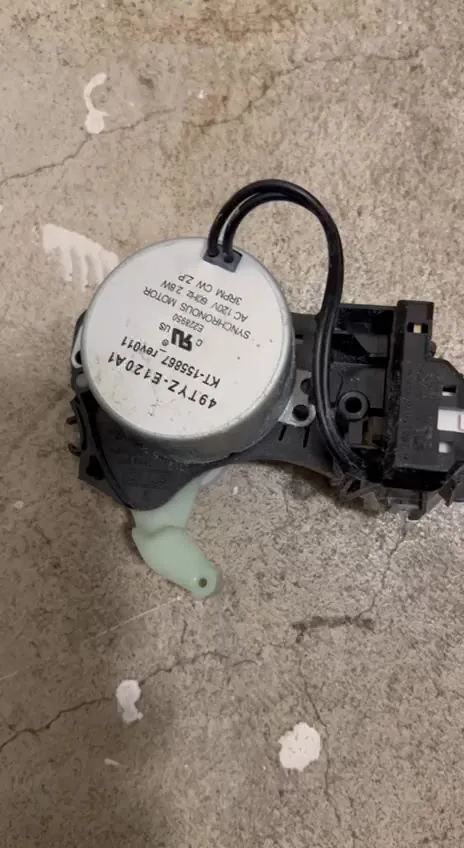
- The lower shift motor or actuator became the targeted branch.
A similar symptom can have a different cause on another washer. Observing which mechanical member moves is stronger evidence than describing the sound alone.

What the follow-up added
Eight days later, the technician reported replacing the actuator and posted before-and-after videos. The follow-up did not explicitly say that the complaint was permanently closed, so the result is marked as confirmed by replacement with no reported negative follow-up.
The source also noted that the replacement actuator's lever did not move by hand. That observation should not be turned into a universal bench test without model documentation.
A reproducible diagnostic sequence
- Find the model-specific service sheet inside the cabinet.
- Command agitation and spin separately in the documented diagnostic mode.
- Observe whether the mechanism physically changes state.
- Inspect the actuator, linkage and harness before ordering a transmission.