The Burners Worked, but the Oven Had No Lights, Relay Clicks or Heat
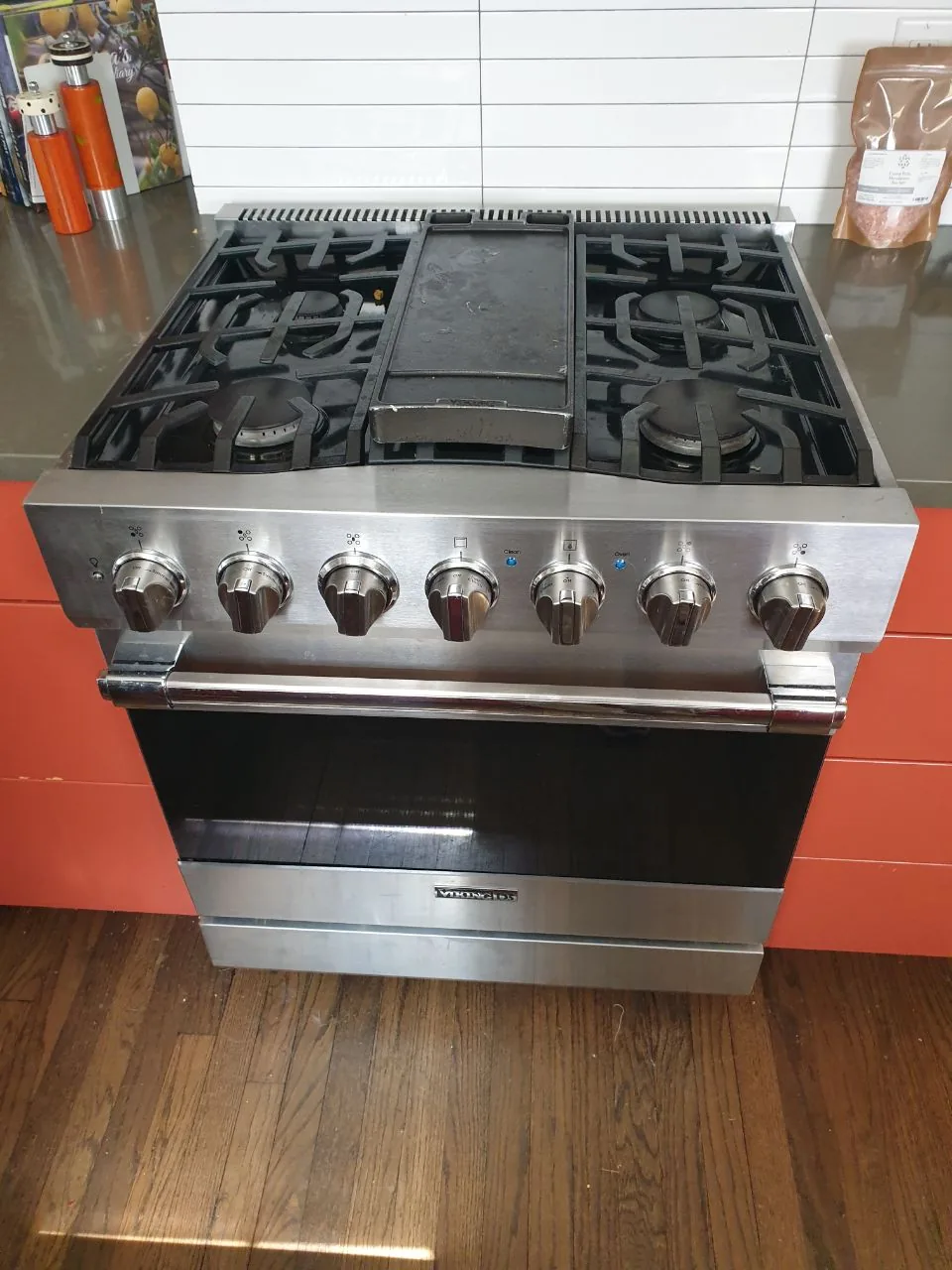
The range looked partly alive because its gas cooktop worked. The electric oven was a separate load path, and the diagnosis had to prove its full supply and shared enable components before a board could be named.
What the working cooktop did not prove
A gas cooktop may need far less electrical power than bake and broil. In the documented visit, both line legs, neutral and line-to-line voltage were checked at the terminal area, and control supply was present. That moved the fault beyond a simple tripped half of the circuit.
A similar symptom can have a different cause on another range. Supply, thermostat, limit, selector, wiring and control electronics can all disable both bake and broil.
Why the wiring diagram should come before disassembly
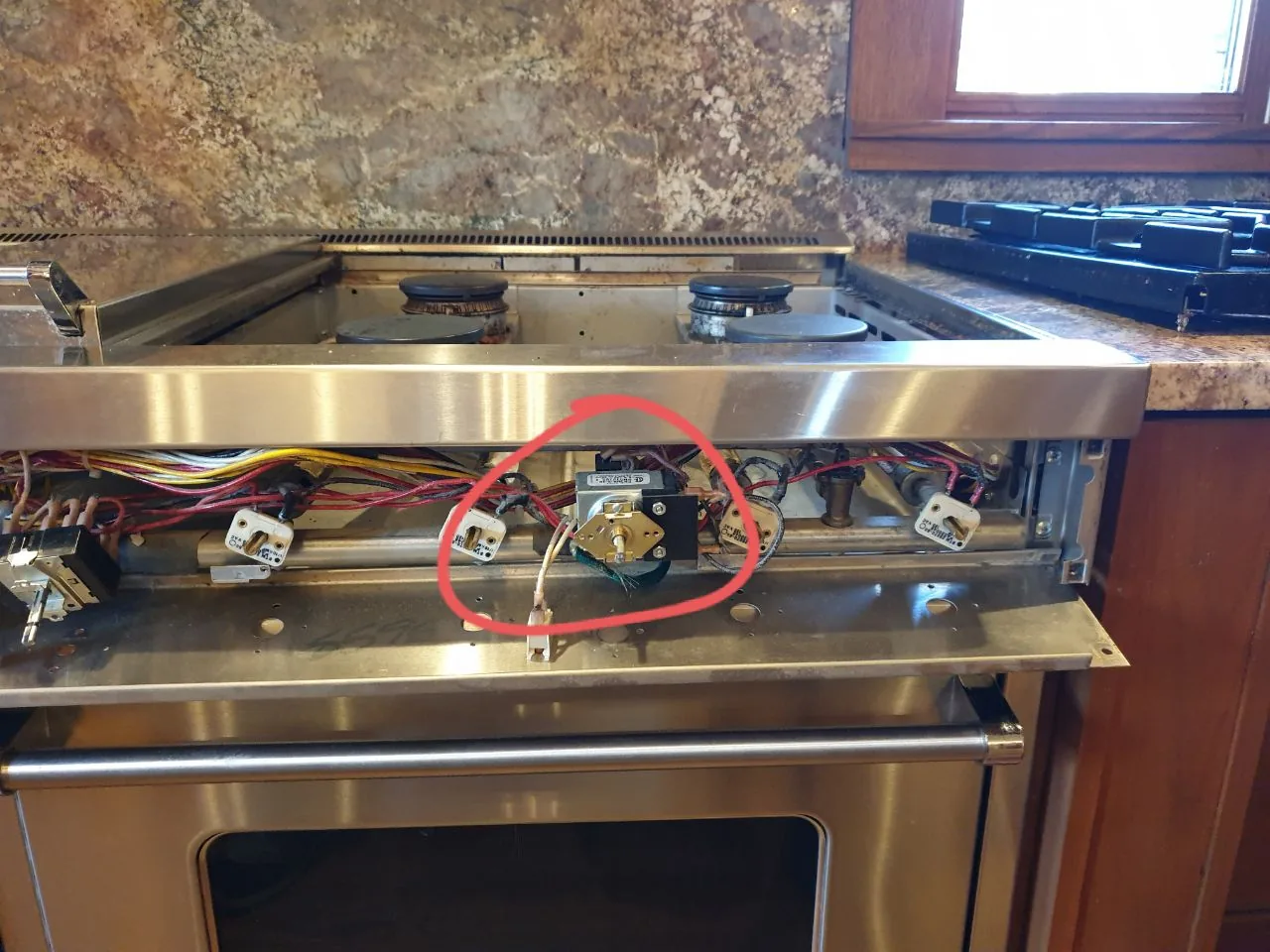
The technician spent substantial effort looking for a separate high limit. On some Viking designs that function may be integrated into, or routed through, the control thermostat. The exact diagram reveals which component is shared by the dead lamps, missing relay activity and both heating modes.
The board hypothesis remained open
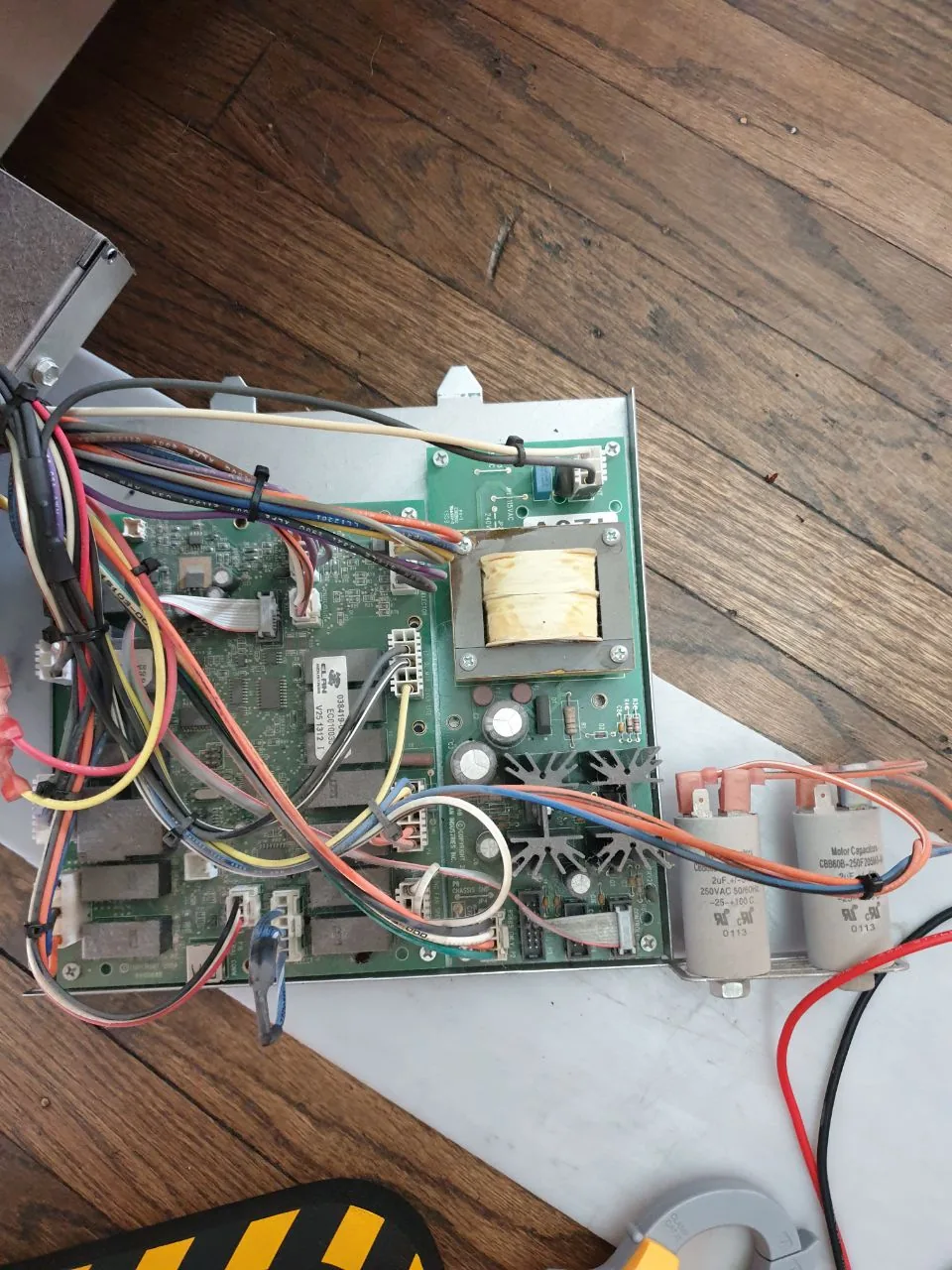
Control board
Supply reached the control area, yet no relays or oven indicators responded.
Control thermostat or shared limit path
A separate technician described a visually similar Viking where board and sensor work failed and the thermostat was the cause.
No replacement result
The opening discussion stopped at the board recommendation, so neither branch was confirmed.
A professional test order
- Identify gas and electric functions that still operate.
- Verify complete supply at the terminal block under the manufacturer's procedure.
- Trace the shared oven thermostat, limit and selector path from the exact diagram.
- Confirm inputs and outputs at the control before ordering it.
- Plan safe movement of the heavy range if rear access is required.