Running the Clean Cycle Is Not Always the Whole Cleaning
A commercial machine can circulate solution while scale, biofilm and debris remain on removable or shielded surfaces. The correct scope comes from the exact manufacturer's procedure and the condition found inside.
Cleaning, descaling and sanitizing are related but not identical
Descaling targets mineral deposits. Cleaning removes soil and residue. Sanitizing reduces microorganisms on already cleaned food-contact surfaces. A complete service may require all three in the sequence and concentrations specified for that machine.
A similar symptom can have a different cause on another ice machine. Cloudy ice, low production, odor or poor harvest can reflect maintenance, water quality or a mechanical or refrigeration fault.
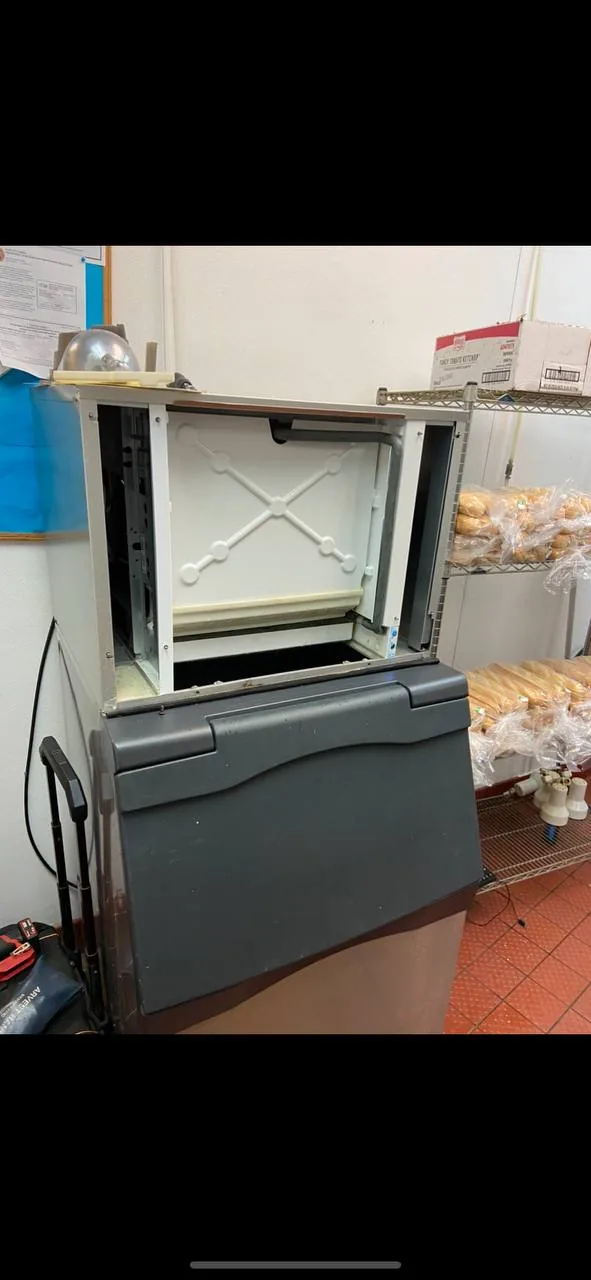
Why the model-specific disassembly instructions matter
The field discussion emphasized that each machine has its own removable parts and cleaning system, normally documented in the manual or on an internal label. Circulating solution through the reservoir may not expose both sides of curtains, probes, distribution parts, troughs and the bin.
A defensible service record shows the actual scope
Exact procedure
Record the model and the manufacturer cleaning and sanitizing instructions used.
Parts removed
List the food-contact and water-path components that were disassembled and cleaned.
Return to service
Document rinsing, sanitizing, reassembly and observed production after the work.
Why one universal price or recipe would be misleading
Machine size, access, scale load, bin condition and disassembly time change the scope. The source included informal prices, but not a standardized specification. This page therefore defines what to verify rather than publishing a misleading fixed quote or chemical recipe.