The Drain Pump Started as Soon as the Washer Was Plugged In
No cycle had been selected. A used replacement board allowed limited operation, but the washer returned to constant drain.
What the failed attempts established
The pressure-sensor hose was removed and cleared without changing the behavior. The old board produced constant drain, and a used board completed at least part of calibration, Drain & Spin and a normal cycle before the same symptom returned.
A similar symptom can have a different cause on another washer. Trapped water, a blocked pressure path, leak sensing, wiring, pump load and control logic can all place a machine in a protective drain state.
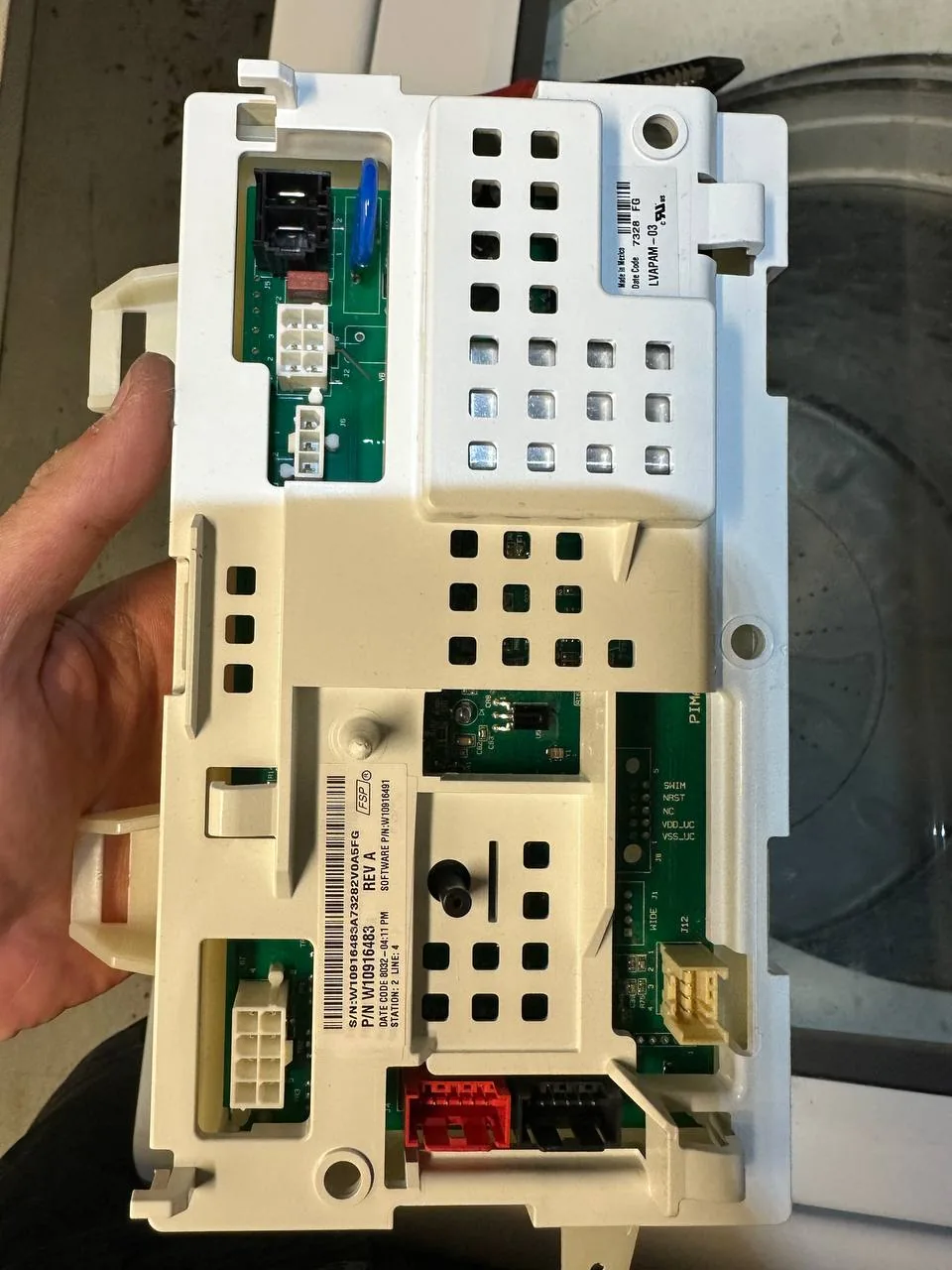
Why the pump remained part of a board diagnosis
Two technicians described earlier cases in which changing both the board and drain pump restored operation. One explanation was that a weak or overheating pump did not remove water within the expected drain period, allowing the pressure system to keep the machine in flood protection. Another report warned that the pump could damage the board.
Those explicit outcomes are useful evidence for the combined branch, but the source washer had not yet received the completed new-board-and-pump repair.
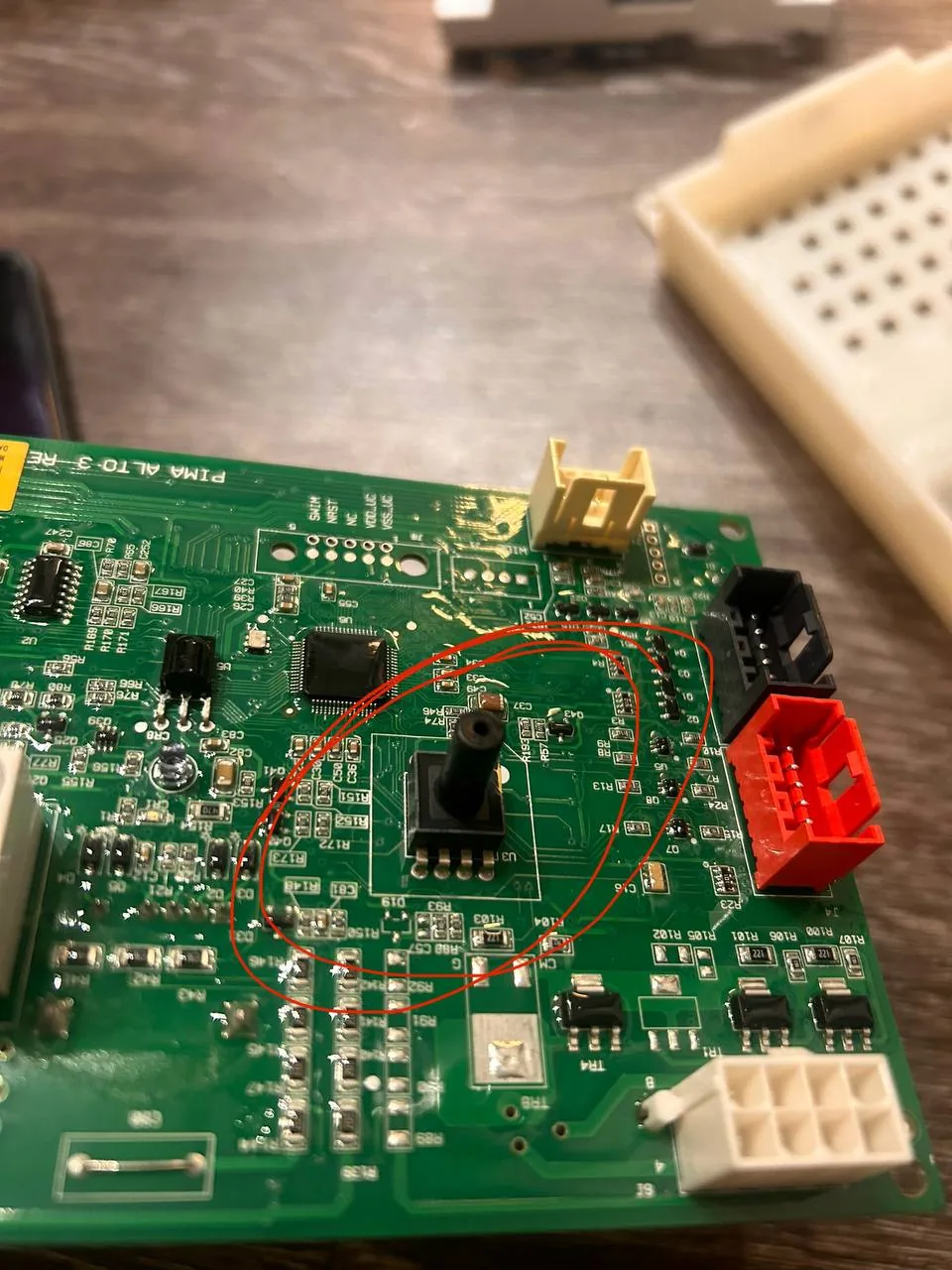
A second branch: the pressure sensor mounted on the board
In a separate Whirlpool top-load discussion, the technician traced the constant-drain logic to the pressure input on the control board. The reasoning was that the controller kept running the pump because it continued to interpret the tub as containing water. Instead of replacing the complete board, the technician identified the pressure-sensor component as a separately serviceable part and ordered it for stock.
The source did not report the result after installation, so this remains a diagnostic and board-repair branch rather than a confirmed fix. It also identified a useful false positive: excessive suds from non-HE detergent can make an HE washer behave as though water remains. Visible foam should therefore be separated from an electrical pressure-signal fault.
How a technician separates the remaining causes
The next diagnosis must verify whether water remains, whether the pressure signal resets, whether the drain path is restricted, and whether the pump moves water at a normal rate. Board revision and calibration also matter because the temporary board differed from the original.