The Symptom Was Small; the Access Risk Was Not
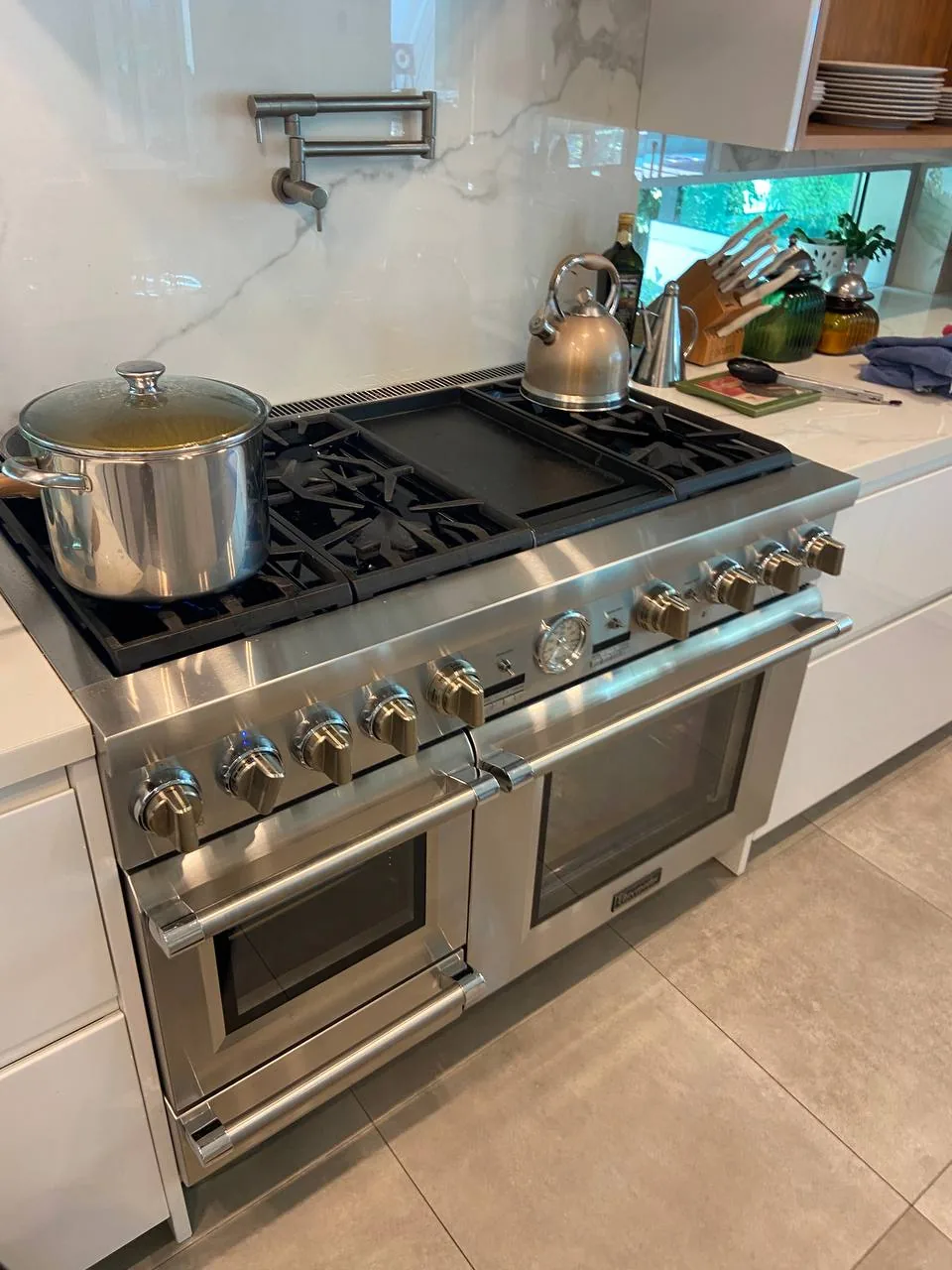
On a Thermador PRD48JDSGU/12, the far-right XLO burner could wait roughly 30 seconds to ignite or fail to receive gas. Before replacing potentiometers, an XLO module or a spark module, the technicians had to decide how much of the rangetop actually needed to be opened.
Why the exact model changed the repair plan
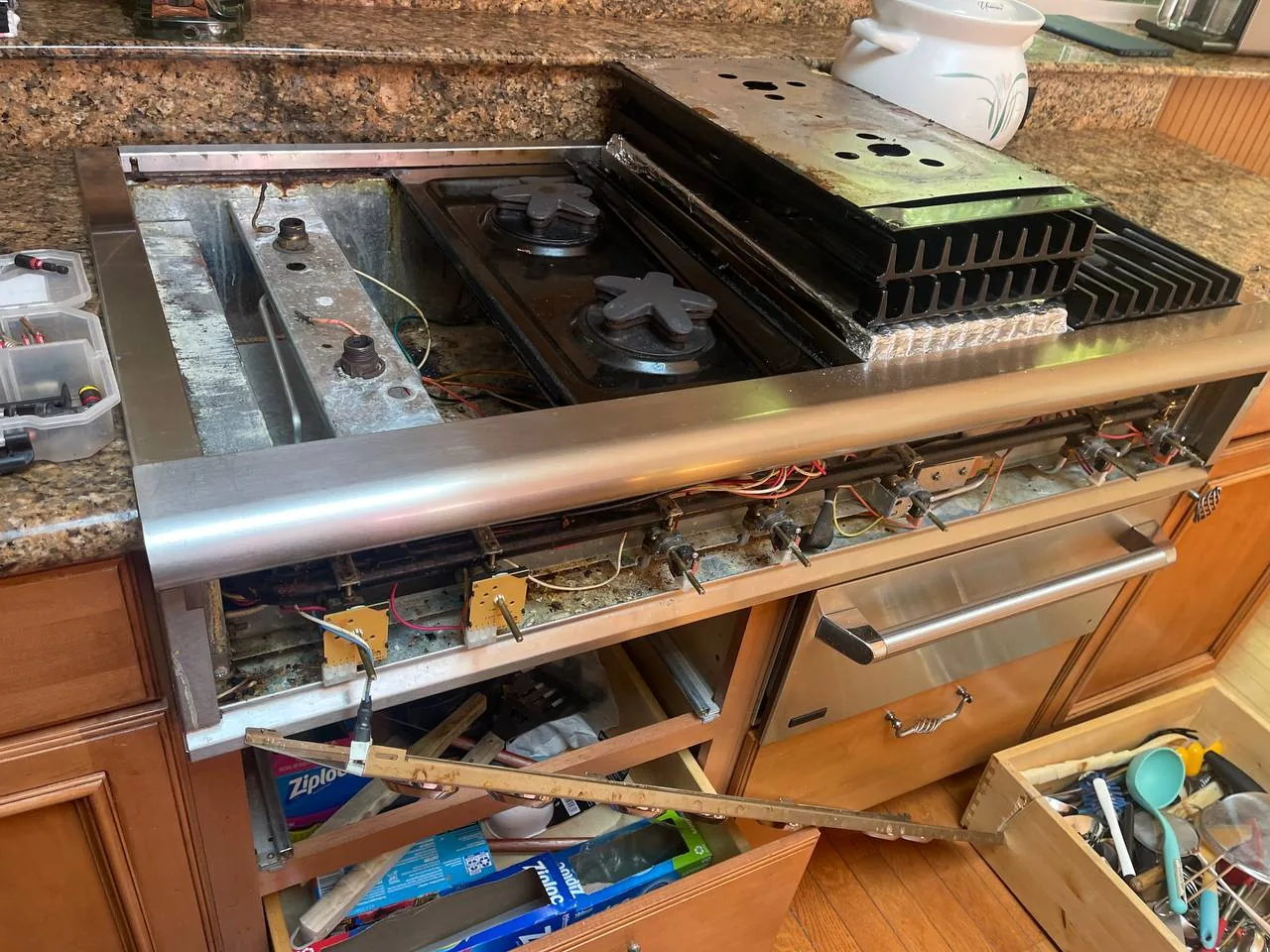
Older Thermador front panels can appear to promise straightforward access after knobs and panel screws are removed. The PRD48JDSGU/12 in this discussion used a newer construction where access could involve opening the top and disturbing burner hardware.
A similar symptom can have a different cause on another range, and the same component can require very different labor on another model revision. Diagnosis and access planning must be based on the complete model suffix and parts diagram.
What was known about the fault
- All burners generally worked.
- The far-right burner could ignite after a long delay or not receive gas.
- The symptom made the potentiometer branch plausible.
- The simmer-control board was also plausible, especially where spills may have reached it.
- The discussion did not report component tests, replacement or a final result.
The recommendation was to begin with the branch that could be reached with less disruption, where technically appropriate, rather than committing immediately to a full front-panel teardown.
Access is part of the diagnosis and the estimate
Burner hardware may be seized
Venturi, jet-holder and base fasteners can turn a planned disassembly into drilling and hardware replacement.
Contingency parts matter
Required hardware should be identified before opening a premium range so it is not left unusable.
The least disruptive branch comes first
If the board branch can be checked by opening only the affected area, it may preserve both evidence and equipment.
The estimate needs conditions
Labor should distinguish normal release from seized-hardware recovery instead of promising one price for unknown access.
A defensible service sequence
- Record the complete model and identify the exact burner and XLO behavior.
- Confirm whether spark, gas release and ignition are each present and when.
- Review the model-specific diagram and service procedure before removing trim.
- Test the accessible control branch before expanding disassembly when the procedure allows it.
- Prepare required burner hardware before disturbing parts known to seize.
- Explain the access contingency in the estimate and obtain approval before escalation.
This sequence does not identify a bad potentiometer or XLO board from the symptom. It makes the uncertainty visible and prevents a diagnosis from quietly becoming a much larger teardown.