Field evidence
F1E5 Stayed After the Magnetron and Inverter Were Replaced
A second inverter produced the same code, while the first replacement physically failed. That sequence calls for circuit diagnosis before another high-voltage part.
What the failed replacements established
- The microwave did not heat at all.
- The display showed F1E5.
- The magnetron and inverter were replaced.
- One replacement inverter ruptured or failed physically.
- A second inverter still produced F1E5.
The same symptom can have a different cause on another microwave. This sequence does not prove that both replacement inverters were defective.
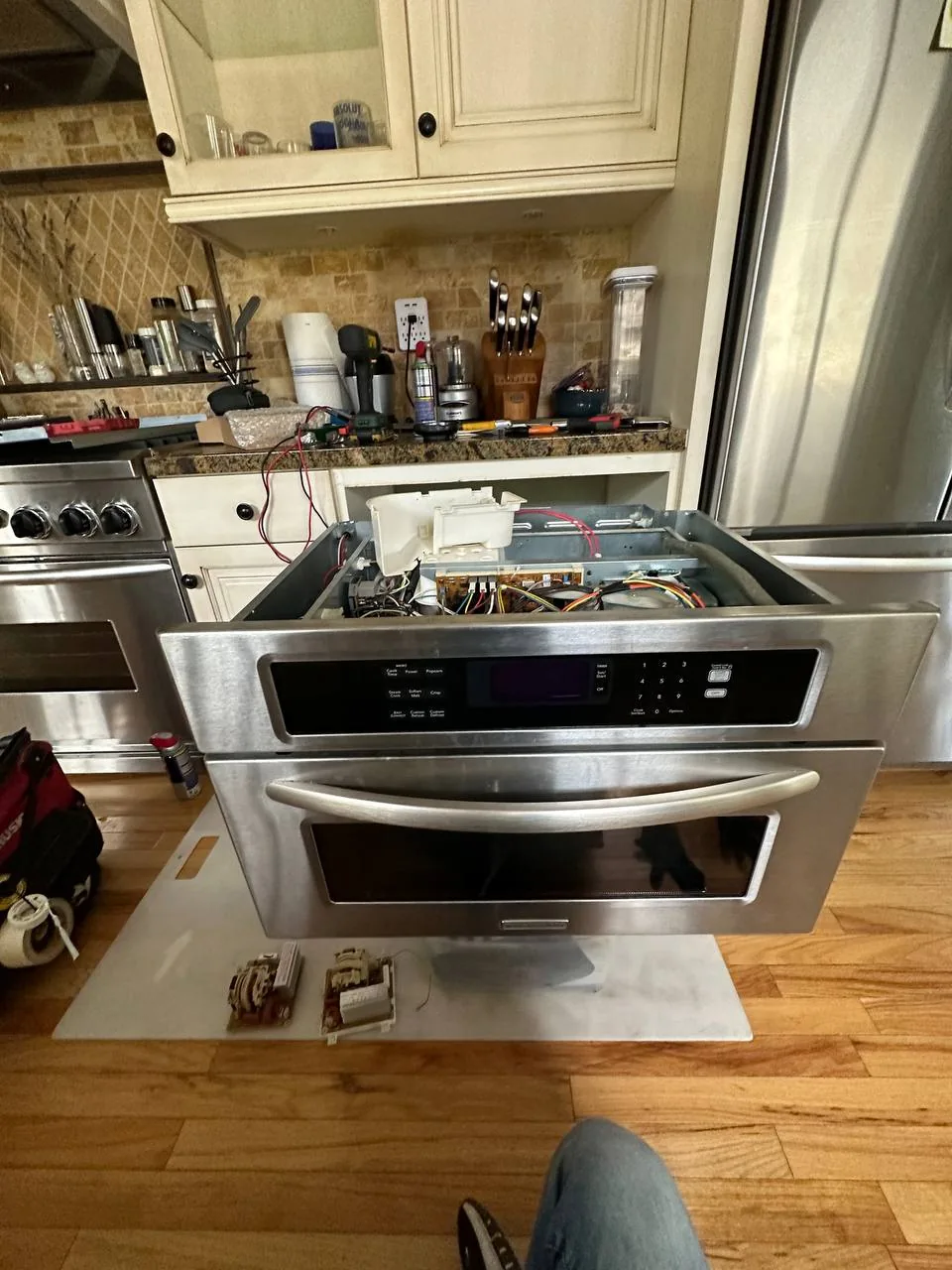
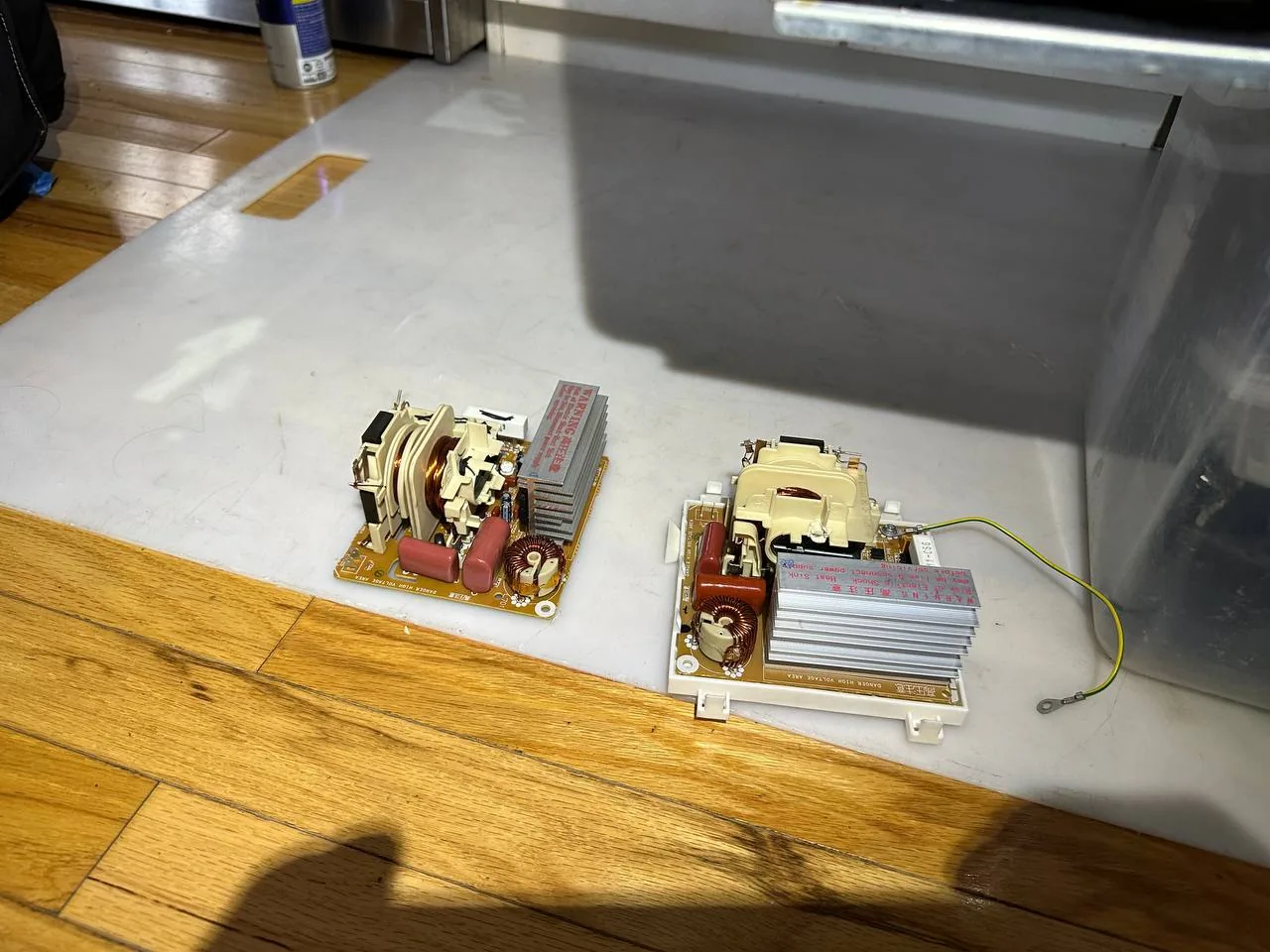
What remained untested
The short discussion did not report the complete model, supply checks, inverter command, harness condition or the cause of the physical failure. Those missing facts matter because a wiring, control or supply problem can survive multiple part replacements.
The next diagnostic sequence
- Record the full model and all original and replacement part numbers.
- Inspect the failed inverter and connectors for the location of damage.
- Verify supply, interlocks, harness and control command from the exact service procedure.
- Test the high-voltage load before installing another inverter.
Microwave high-voltage safety: internal capacitors can retain lethal energy after unplugging. Do not open or test the inverter, magnetron or interlock circuit without qualified microwave service.
A repair that did not follow the obvious path
Recently published cases
Whirlpool F03 E01 with Drain Running Forever
A Whirlpool ran its drain forever, flashed the lock lamp and showed F03/E01 after a level-sensor connection changed. The signal path came first.
Maytag MVW7230HW0 Quick Wash Stuck at 17 Minutes
A Maytag MVW7230HW0 kept operating while Quick Wash remained at 17 minutes. The case separates a stalled countdown from a simple no-spin fault.
Maytag F1E2 After Drain Worked and Programs Stopped
A Maytag drained correctly, then programs stopped after pause and F1E2 appeared. The case separates standing-water door lock from motor control.