Both Heating Modes Failed in Only the Upper Oven
Because bake and broil were both dead in one cavity, the useful question was what those modes share—not which element to replace first.
What was actually observed
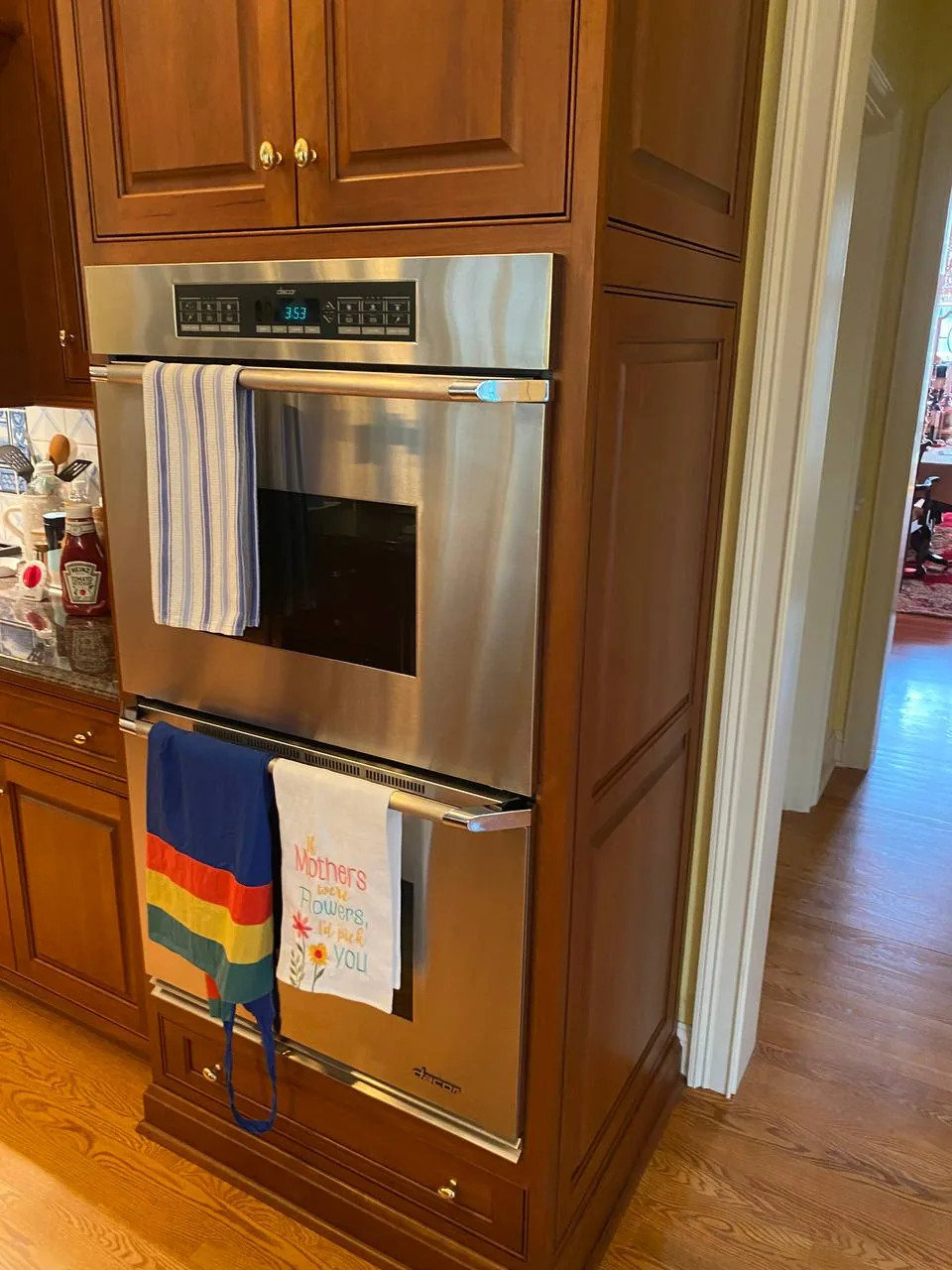
- The appliance was a Dacor double wall oven.
- The upper cavity did not heat in either bake or broil.
- The exact model was not included in the preserved discussion.
- The model label was located behind a grille.
A similar symptom can have a different cause in another oven. Two failed modes in one cavity make a shared path more useful to test, but they do not prove a specific part.
The two branches raised by the case
The service diagram was the deciding reference. If that revision placed a high-limit in the upper-cavity heating path, continuity through that safety device was the first branch to verify. If there was no separate high-limit, the control and its shared relay path remained the leading branch.
This is a diagnostic fork, not proof that every Dacor no-heat complaint is a high-limit or board failure. The source ended before either path was measured.
What to record before service
- Confirm whether the lower cavity still heats in both modes.
- Record whether the upper convection fan and display still operate.
- Photograph the complete model label and any displayed code.
- Note whether the failure followed self-clean, a power event or overheating.