Two Door-Switch Replacements Did Not End the Breaker Trips
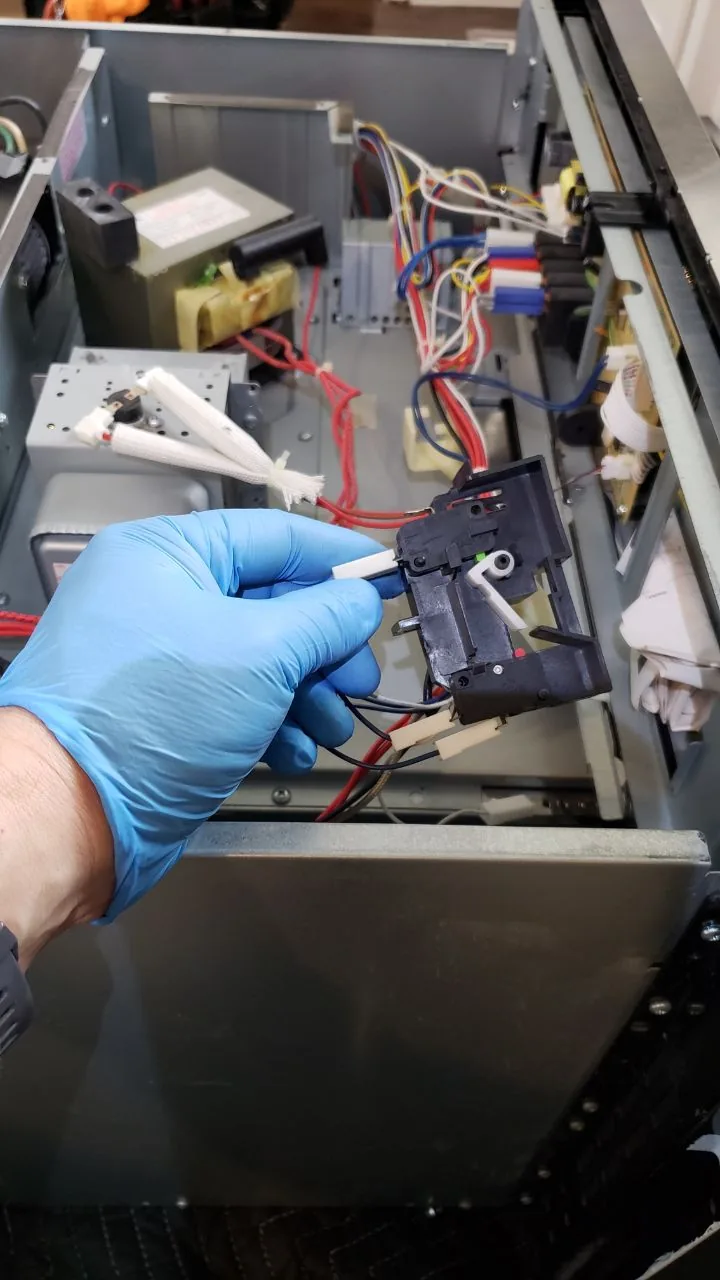
The first switch was visibly burned closed. When replacements failed again, the switch became evidence of a larger fault rather than the complete diagnosis.
The repeated-failure timeline
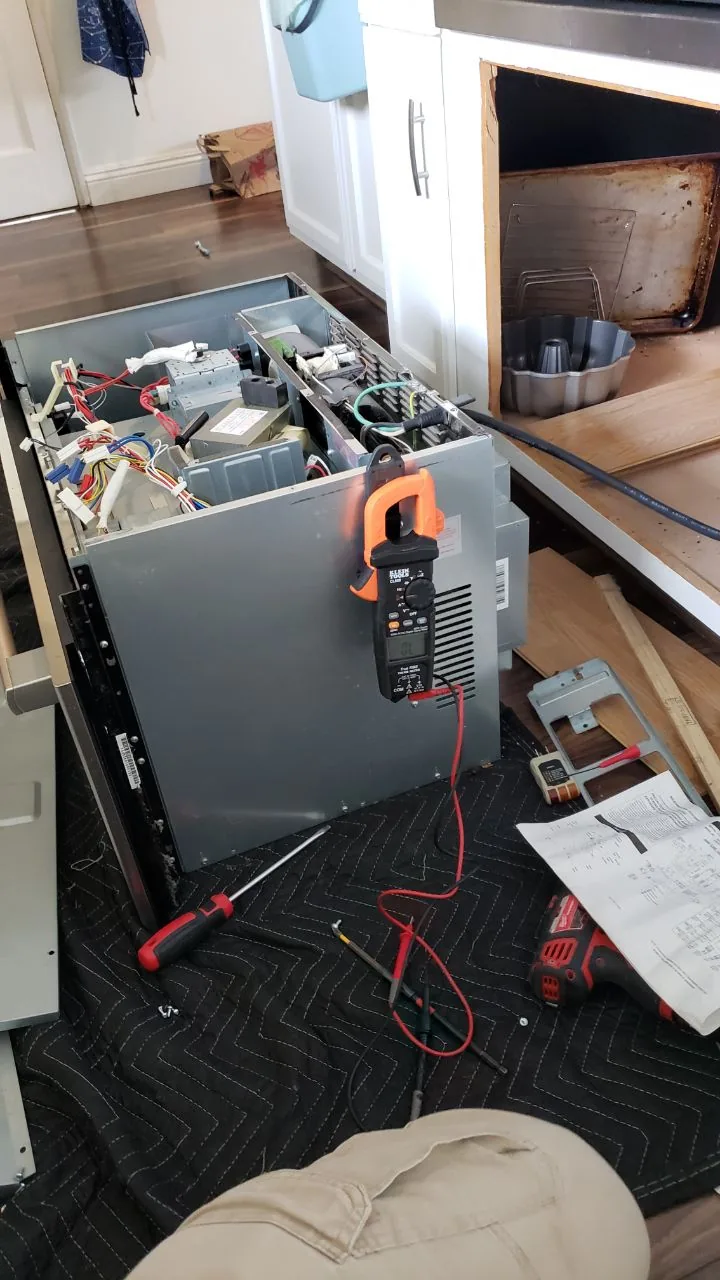
- The microwave tripped the breaker immediately when connected.
- The service procedure led to a left door switch with contacts burned together.
- A replacement was followed by a callback one day later.
- The switch was replaced again and another callback followed.
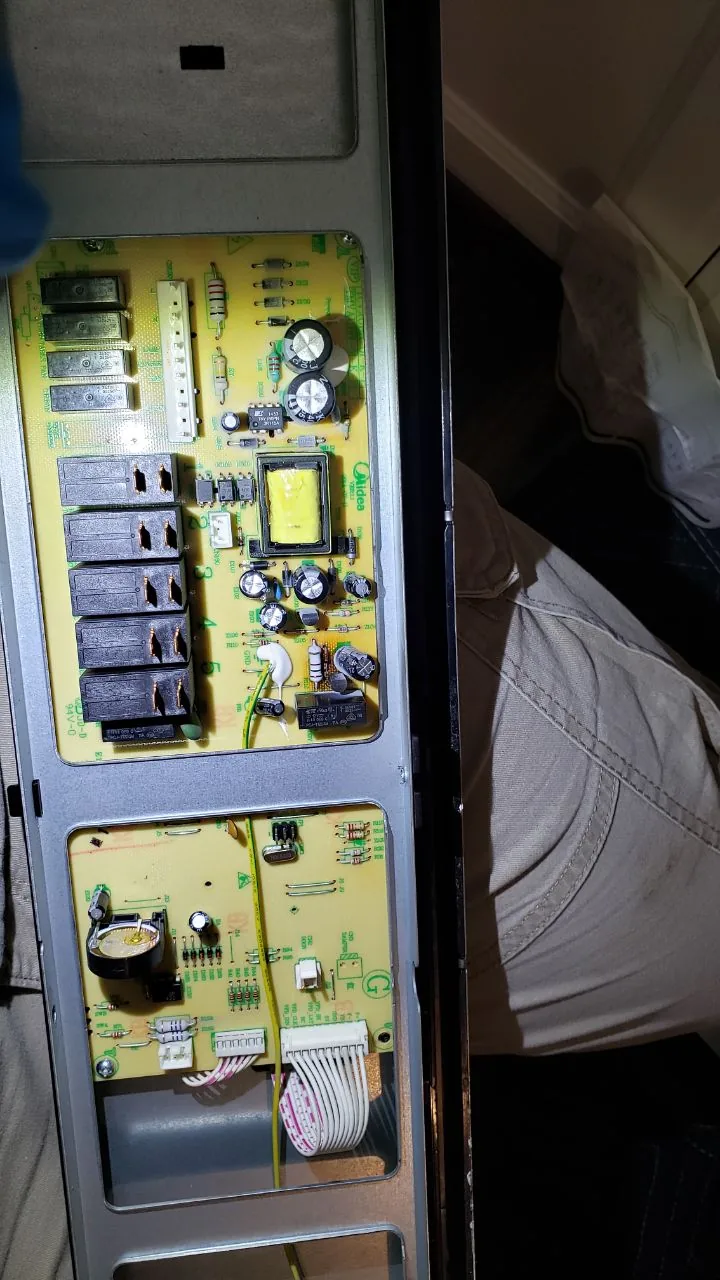
- The board also showed heat damage at a relay, resistor and capacitor.
The same symptom can have a different cause. An interlock can fail mechanically, from door alignment, from control timing or because another electrical fault stresses the circuit.
Why the diagnosis had to move beyond the switch
Once two replacements did not hold, the field discussion followed the circuit toward its major load and identified the main high-voltage transformer as a branch to investigate. The heat-damaged board and high-voltage capacitor were also included in the proposed repair scope.
No current measurement or completed repair was reported, so the transformer is not presented as a confirmed cause.
Why another quick switch replacement is unsafe
A repeatedly welded interlock and breaker trip indicate an electrical fault that can damage new parts and create fire risk. Leave the microwave disconnected and preserve the replacement history, board photographs and complete model number for service.