Two Burners Burned Yellow, and Lifting the Cap Turned the Flame Blue
The other three burners were normal. The affected caps were slightly concave, and a tiny position change immediately altered combustion.
Why the unaffected burners were important
A regulator or supply problem would often influence more than two matching burners. The side-by-side difference focused attention on parts unique to the affected burner heads.
A similar symptom can have a different cause on another range. Gas type, pressure, orifices, blocked ports, cap position and room conditions can all affect flame color.
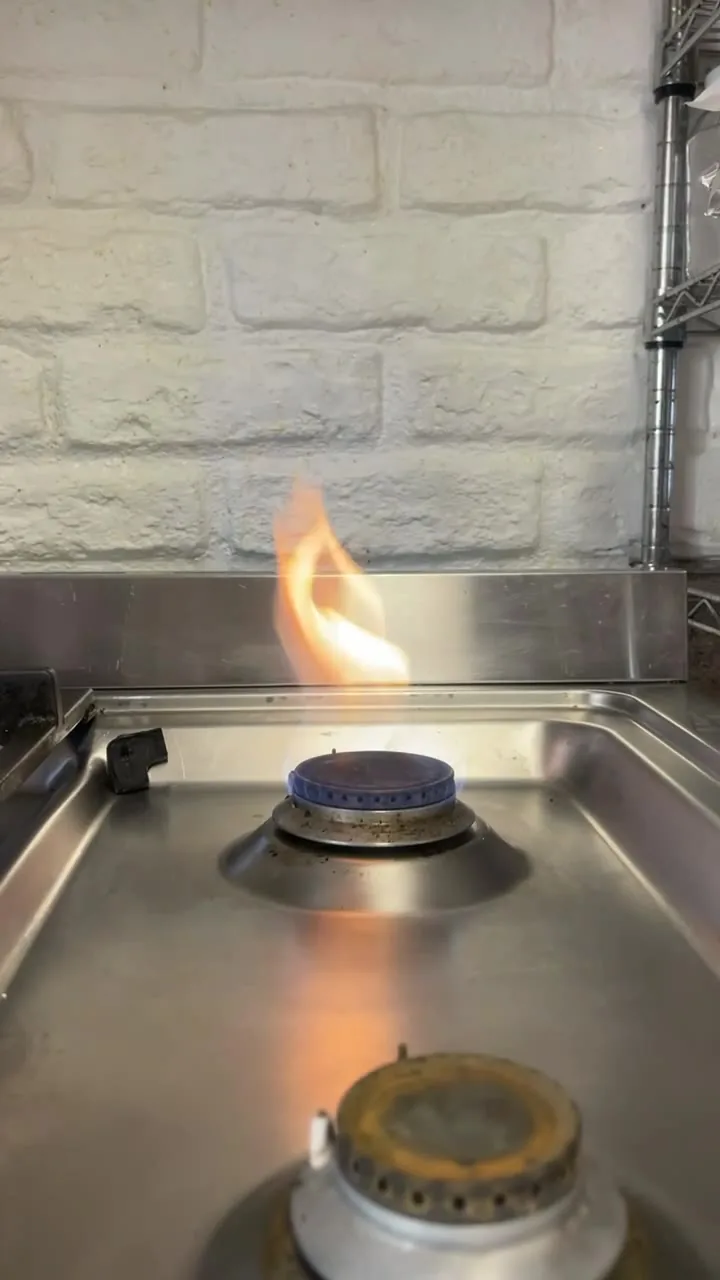
What the cap-lift test demonstrated
The caps sat level but were slightly dished inward. When one was lifted just enough to change the air and gas path, the flame became blue. That repeatable response connected the flame shape to cap geometry rather than mere appearance.
What was and was not confirmed
The original technician ordered caps but did not post the final result. A related case in the same discussion explicitly reported that replacing the cap and burner base solved a comparable problem. The page therefore supports this diagnostic branch without claiming the Ancona itself received that completed repair.