The Motor Started, Then the Heat-Pump Dryer Stopped With F01
The service-manual board checks passed and an electronics specialist found no obvious defect. That did not prove the board good under load, but it made the surrounding inputs and wiring important.
What was checked
- The exact model was WHD5090GW0.
- F01 was described as Main Relay Defect.
- The motor began running before the dryer stopped on the error.
- Manual-directed control-board checks passed.
- The compressor-area thermistor was measured through to the board.
The same symptom can have a different cause on another dryer. Heat-pump models use a different heating architecture from conventional resistance-heater dryers.
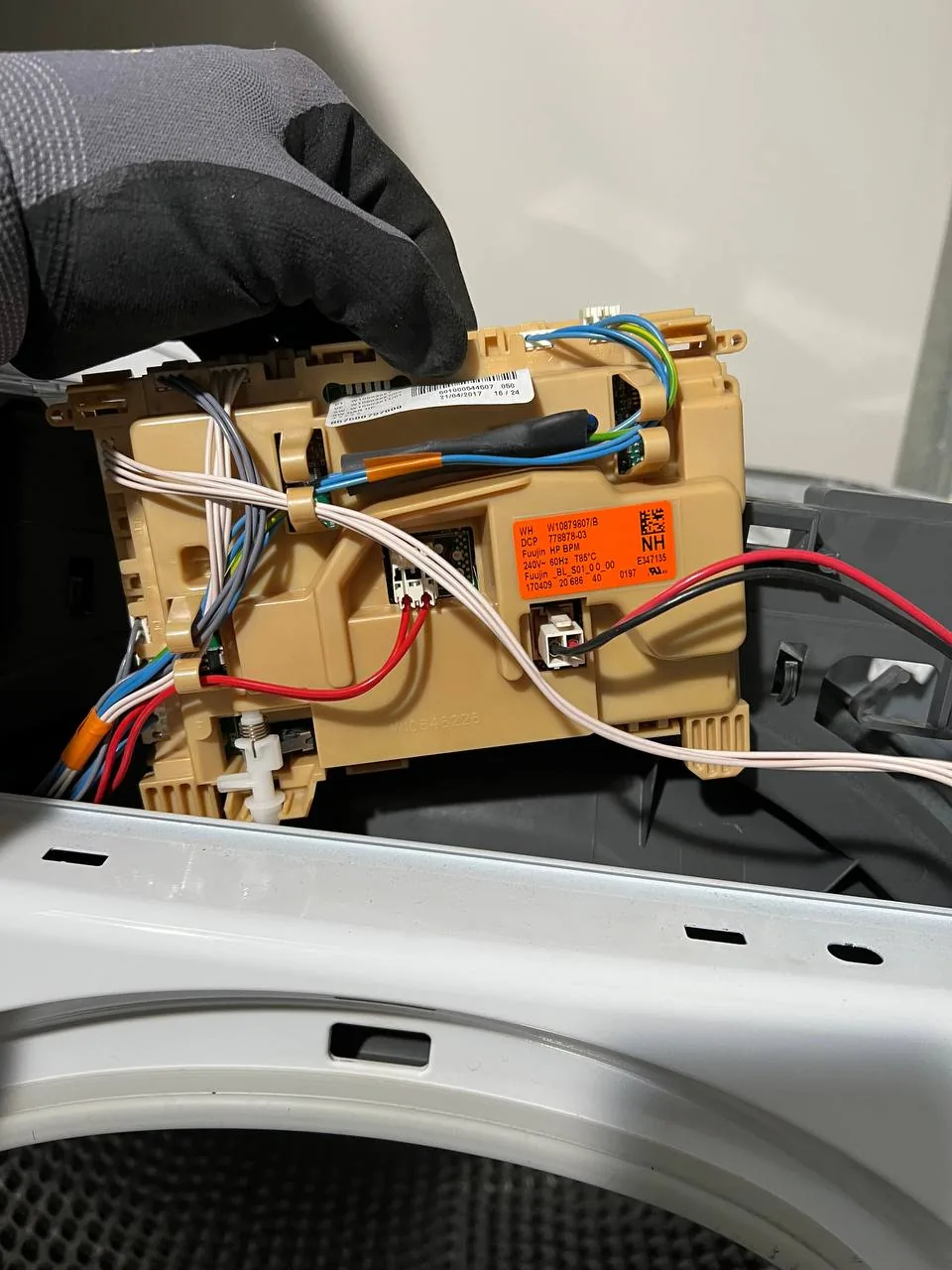
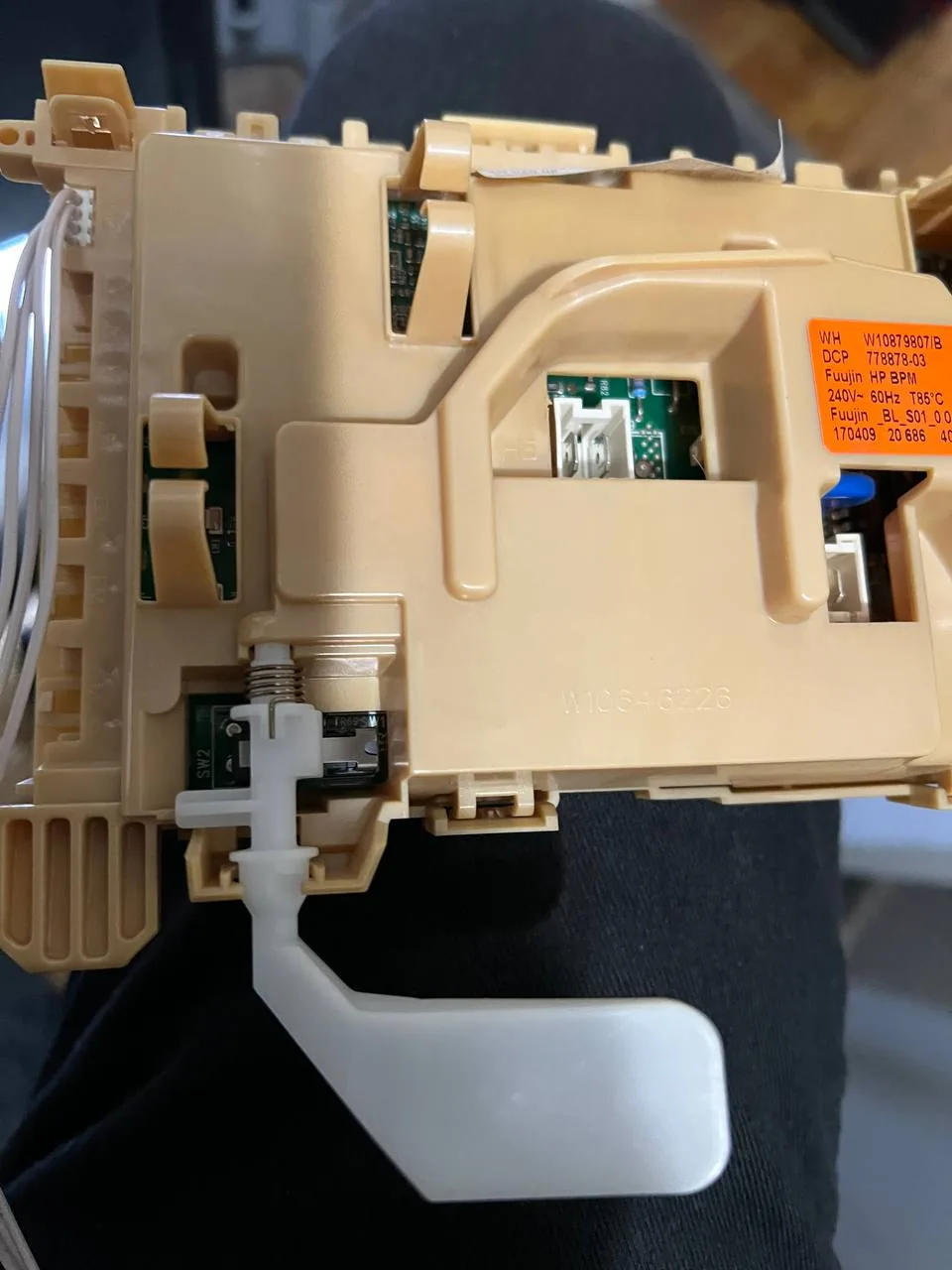
Why a bench check did not close the board branch
An independent electronics inspection was reported as good, but an intermittent relay or input problem may appear only during the operating sequence. The discussion therefore kept the board open while also tracing the complete harness, door-switch input and motor circuit.
The door switch on this design was described as integrated with the control assembly, making exact-model documentation especially important.
The next defensible sequence
- Record how long the motor runs before F01 returns.
- Verify every relevant conductor, not only the subset in the first test.
- Confirm thermistor readings at the correct temperature and at the board connector.
- Check door-switch and motor inputs from the exact service procedure.
- Use the observed sequence to decide whether the control still fails under load.