Why replacing more ignition parts was weak evidence
The burner did ignite, but its run was short. Gas coils and several sensors had already been replaced without changing that pattern. The next useful question was whether the dryer was being tested in the same sealed airflow condition as normal operation.
A similar symptom can have a different cause on another gas dryer. Gas supply, flame sensing, burner parts, exhaust restriction and temperature control remain distinct branches.
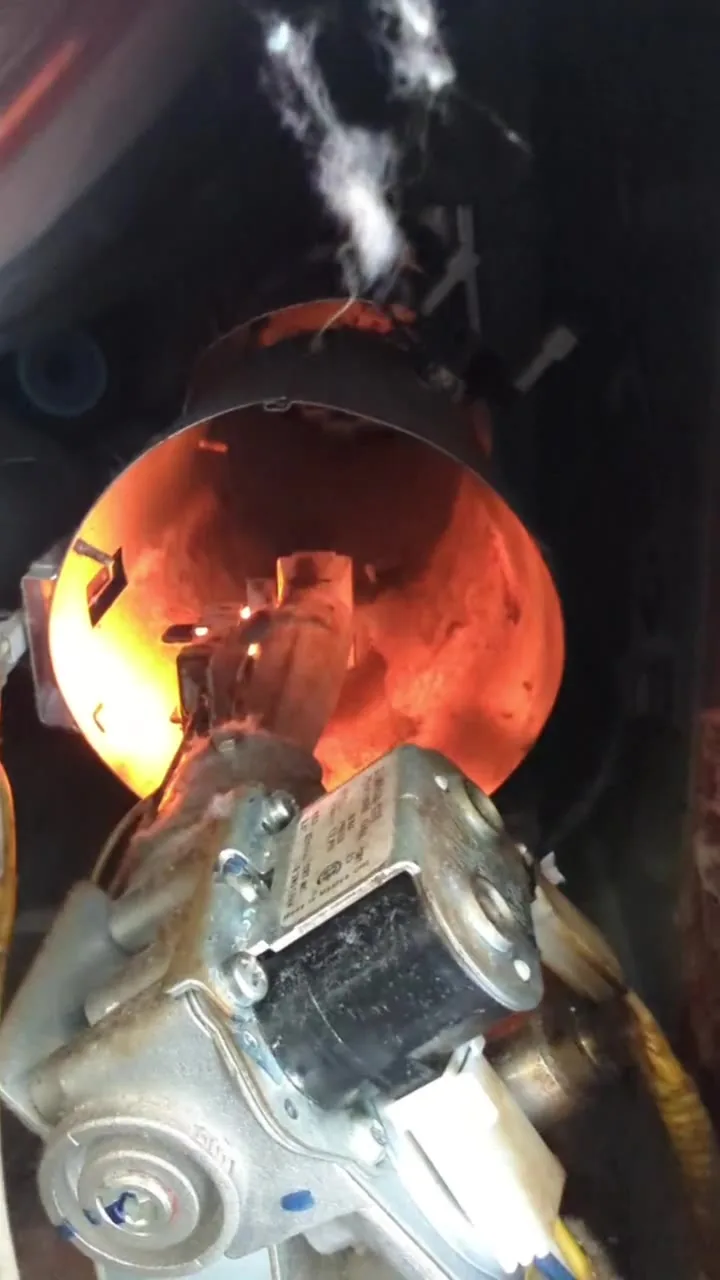
What the related airflow repairs showed
One technician reported a comparable dryer that heated normally after the front panel was installed. Another described two post-vent-cleaning Samsung cases corrected by sealing unintended openings that admitted extra air into the duct path.
Those outcomes make cabinet assembly and uncontrolled air entry worth verifying; they do not prove the same cause on the source dryer, whose result was not posted.
What a technician must compare
The useful comparison is burner run time and exhaust temperature with the cabinet fully assembled and the intended air path intact. Any recent vent work, disconnected joint or missing panel should be documented before another part is ordered.