Field evidence
The Blower Was Suspected; the Motor Was Making the Noise
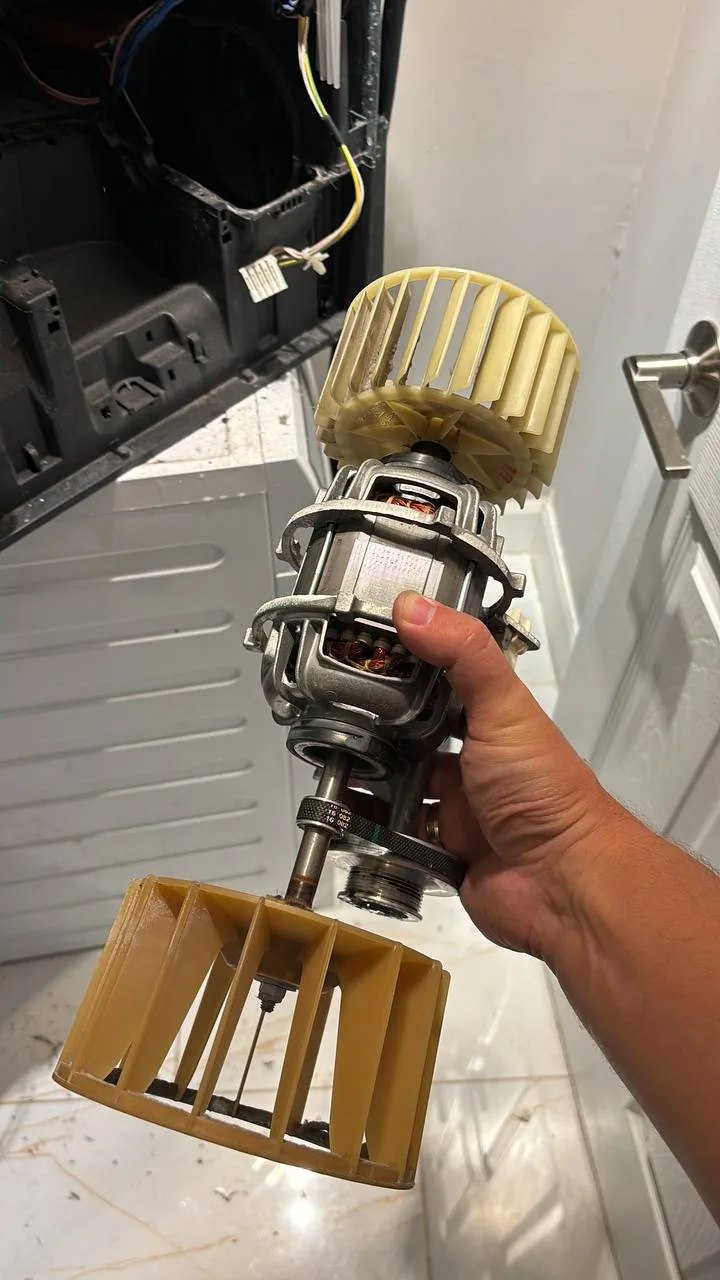
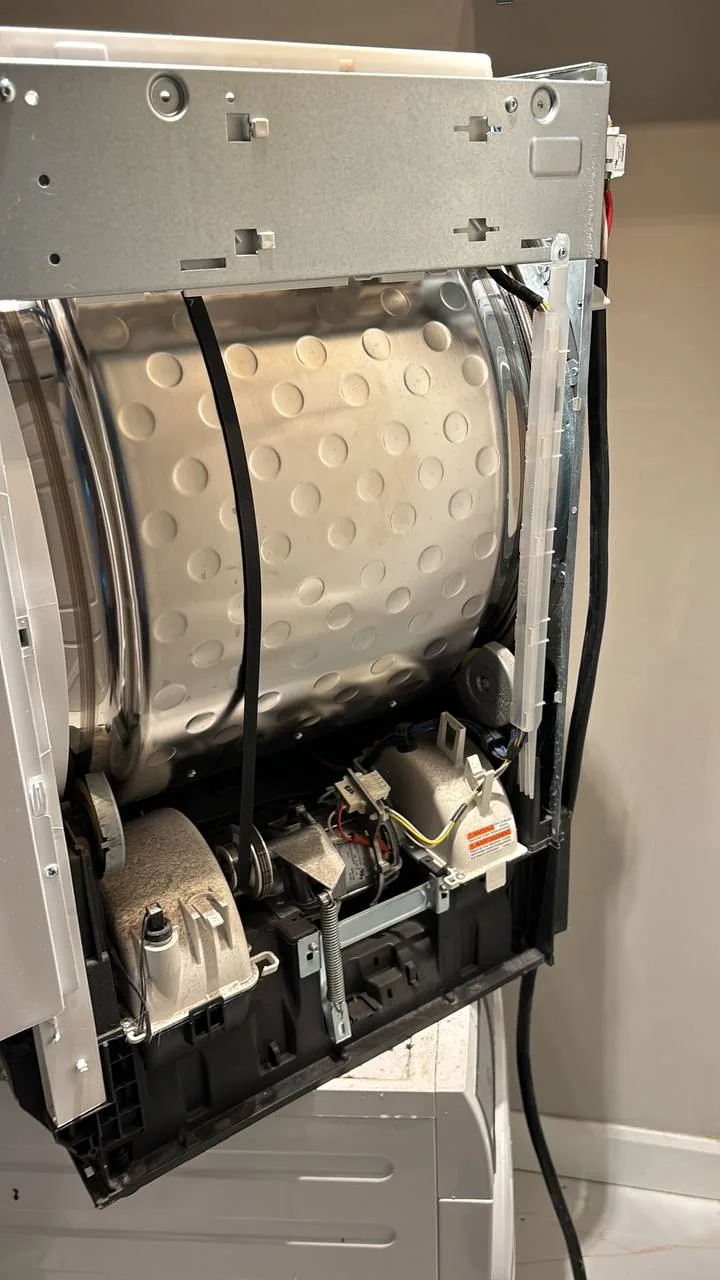
The EIED2CAQSW00 sounded as if something might be caught in the blower. Inspection traced the sound to the drive motor instead.
How the diagnosis changed
- The dryer produced an unusual noise while operating.
- A trapped object in the blower wheel was the initial hypothesis.
- The unit was opened to isolate the sound.
- The technician reported that the drive motor itself was noisy.
The same symptom can have a different cause. A hum, scrape or rattle can also come from the blower, drum supports or an object, so this case does not make every noise a motor failure.
Why the failed first hypothesis is useful
The case preserves the step that did not hold up: the blower-object theory sounded plausible from outside the cabinet but was not the source found during inspection. This prevents a sound description alone from becoming a parts order.
The motor construction was described as unusual by the technicians, but no internal motor defect or completed replacement was documented.
What a useful noise recording includes
- Record startup, steady rotation and coast-down in one clip.
- Note whether the pitch follows drum speed or changes with load.
- Stop the dryer for grinding, burning odor or a stalled drum.
- Provide the full EIED2CAQSW00 serial and product revision.
Moving-parts and electrical safety: do not operate the dryer with guards removed or reach toward a rotating blower or motor. Disconnect power before internal inspection.
A repair that did not follow the obvious path
Recently published cases
GE Monogram ZDT985SIN6II Had Both Pumps Inactive in Test Mode
A GE Monogram ZDT985SIN6II would not drain, and neither pump ran in diagnostics. The case puts voltage, wiring, debris and air-gap checks before the …
Cove DW24 Error 800140: Start with the Drain Path
A real Cove DW24 case explains what error 800140 supports, what it does not prove, and how to separate the drain pump, hose and …
Samsung Gas Oven Igniter Glowed but Could Not Hold the Valve
A Samsung gas oven igniter glowed and the burner lit, but operation was unstable. Replacing the marginal igniter resolved the case.