The Heater Was New, but Water Still Could Not Reach the Drain Pan
The failed replacement redirected the service visit to the fresh-food drain path. After that path was cleared by a qualified technician, the pan immediately received water.
What the heater replacement did not solve
The heater assembly had already been replaced, yet the original water condition remained. The technician then identified the fresh-food drain tube as the path that was not passing water and noted that access from below was restricted.
A similar symptom can have a different cause on another refrigerator. A frozen drain, physical obstruction, damaged pan, leaking supply tube or failed heater can all put water in the cabinet or on the floor.
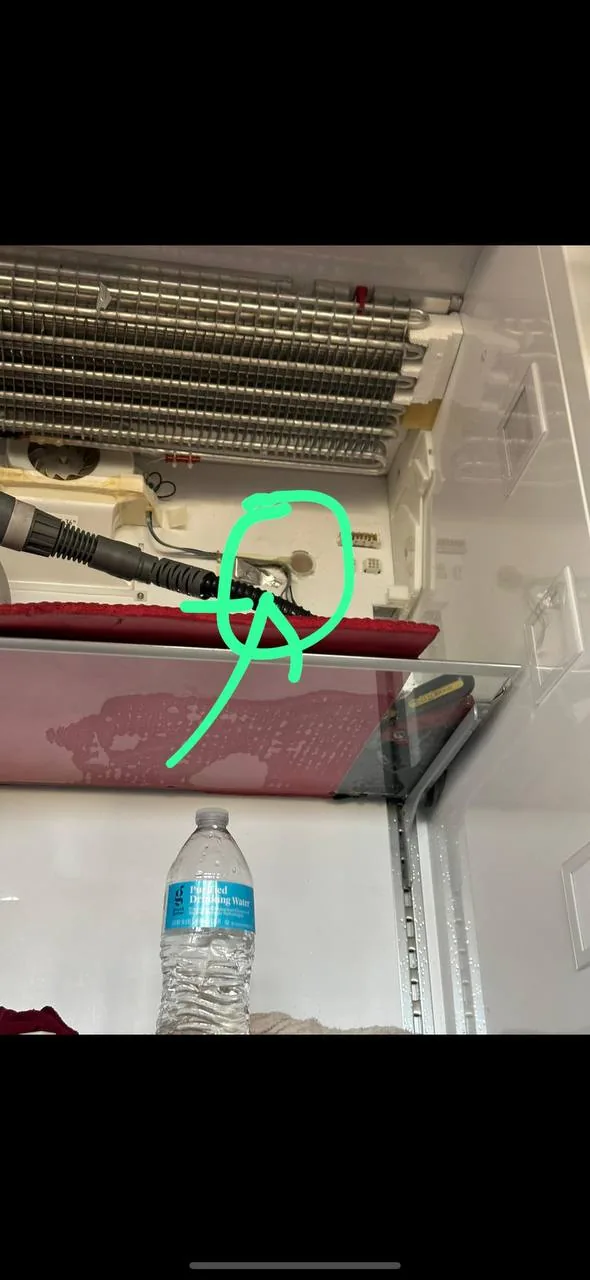
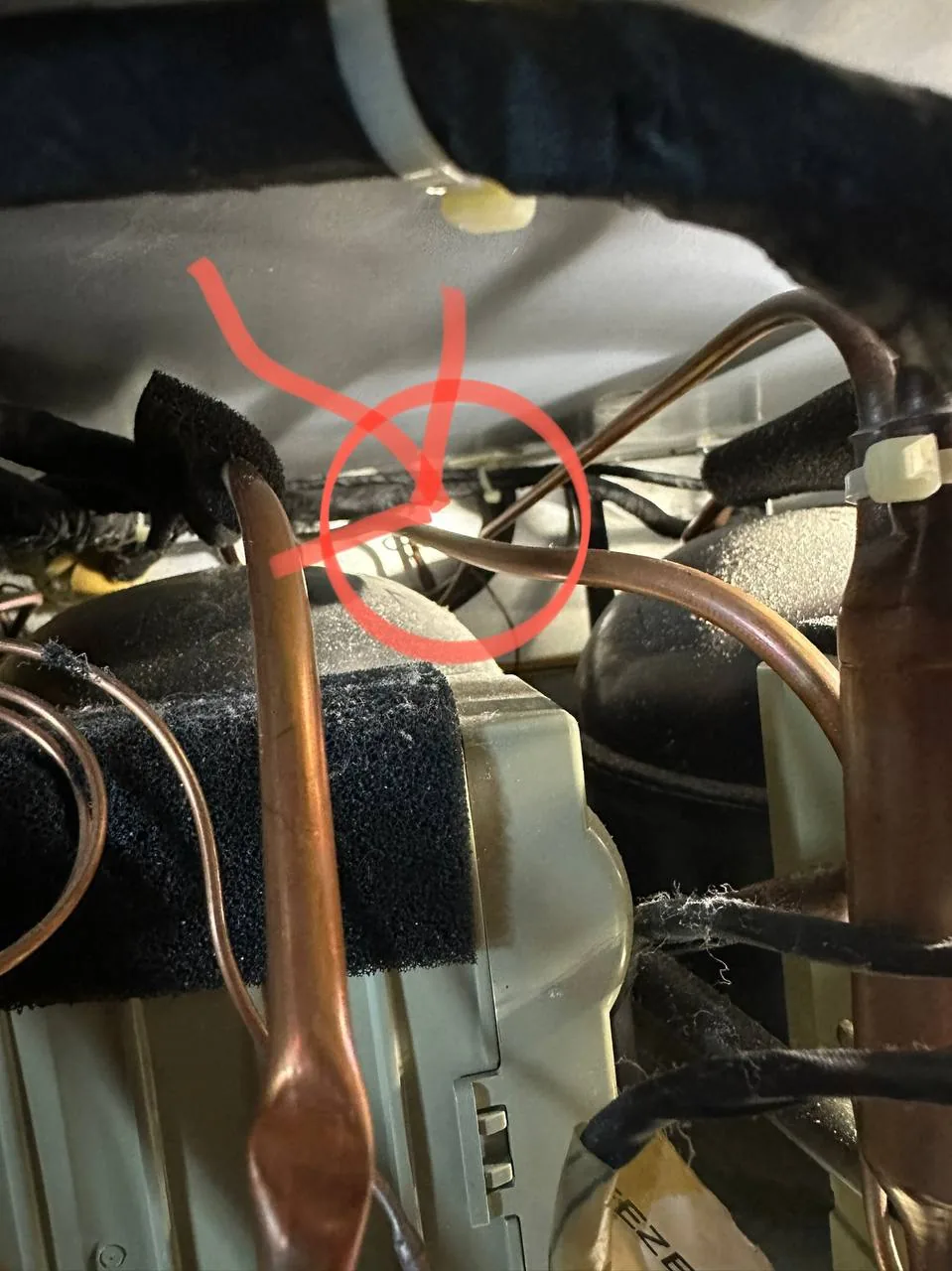
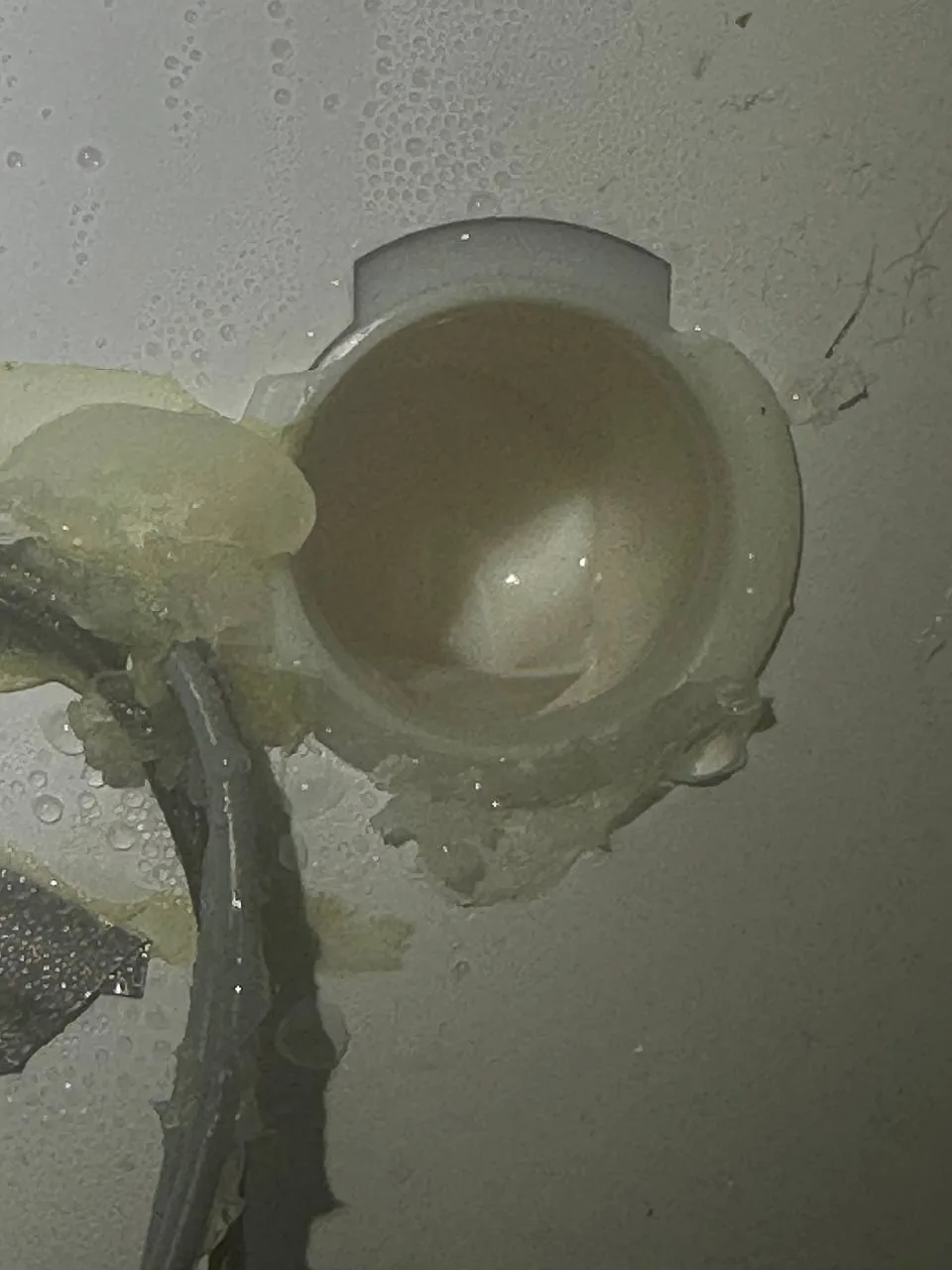
The observed result that confirmed the drain branch
A qualified pressure-clearing procedure was applied from the service side. The technician then reported that the drain pan immediately filled with water. That visible flow showed that the previously restricted path had opened.
The thread did not include a later complaint, but it also did not preserve a long-term follow-up. The result is therefore stronger than a proposal and weaker than a documented weeks-later confirmation.
Why extra sealant was not added
The technician asked whether to add silicone around the drain as a precaution. The answer was to avoid unnecessary material when the cleaned, assembled path was sound. Extra sealant can obscure the real route or complicate later service.