The Refrigerator Overfroze Food Even After a New Control and Sensor
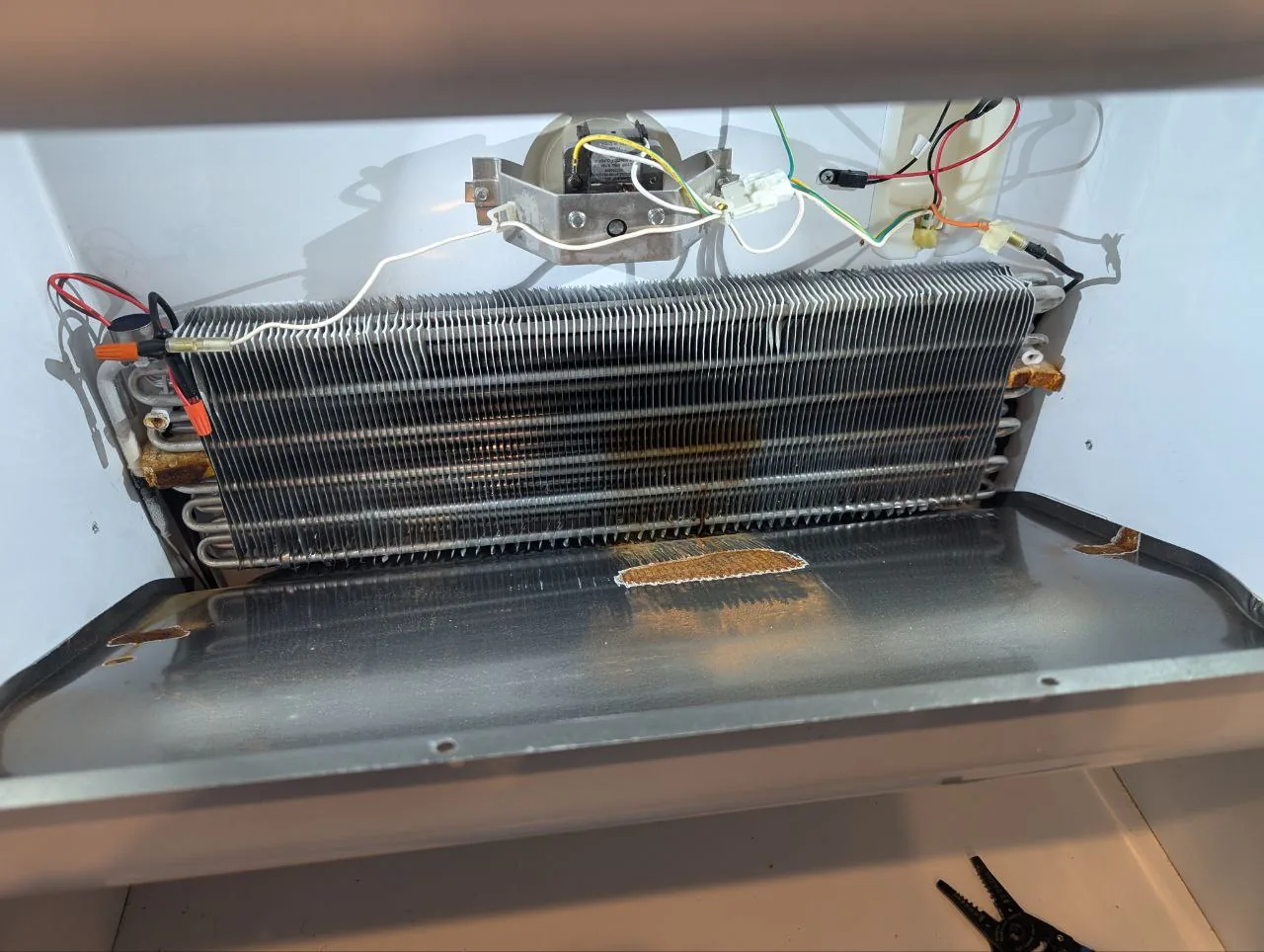
The decisive clue was not another electronic part. The FPRU19F8QFA evaporator frosted only partway and showed corrosion near its center, directing the diagnosis toward a refrigerant leak.
What the unsuccessful replacements ruled against
Another technician had replaced the control and temperature sensor. The reporting technician also checked continuity between the sensor and control and reported that supply reached the sensor. The overfreezing remained.
A similar symptom can have a different cause on another refrigerator. A sensor, damper, control setting or airflow problem can still overcool food; those branches simply did not explain the physical evaporator evidence in this case.
Why the evaporator pattern changed the diagnosis
The coil did not develop an even frost pattern. An experienced technician pointed to corrosion near the middle of the evaporator and proposed a leak there. Several days later, the reporting technician returned and explicitly said that diagnosis had been correct.
The useful lesson is that overfreezing does not always mean the machine is producing too much refrigeration. Uneven refrigerant distribution can leave the sensor area warmer than other parts of the cabinet while products near the active coil become too cold.
The evaporator replacement did not close the repair
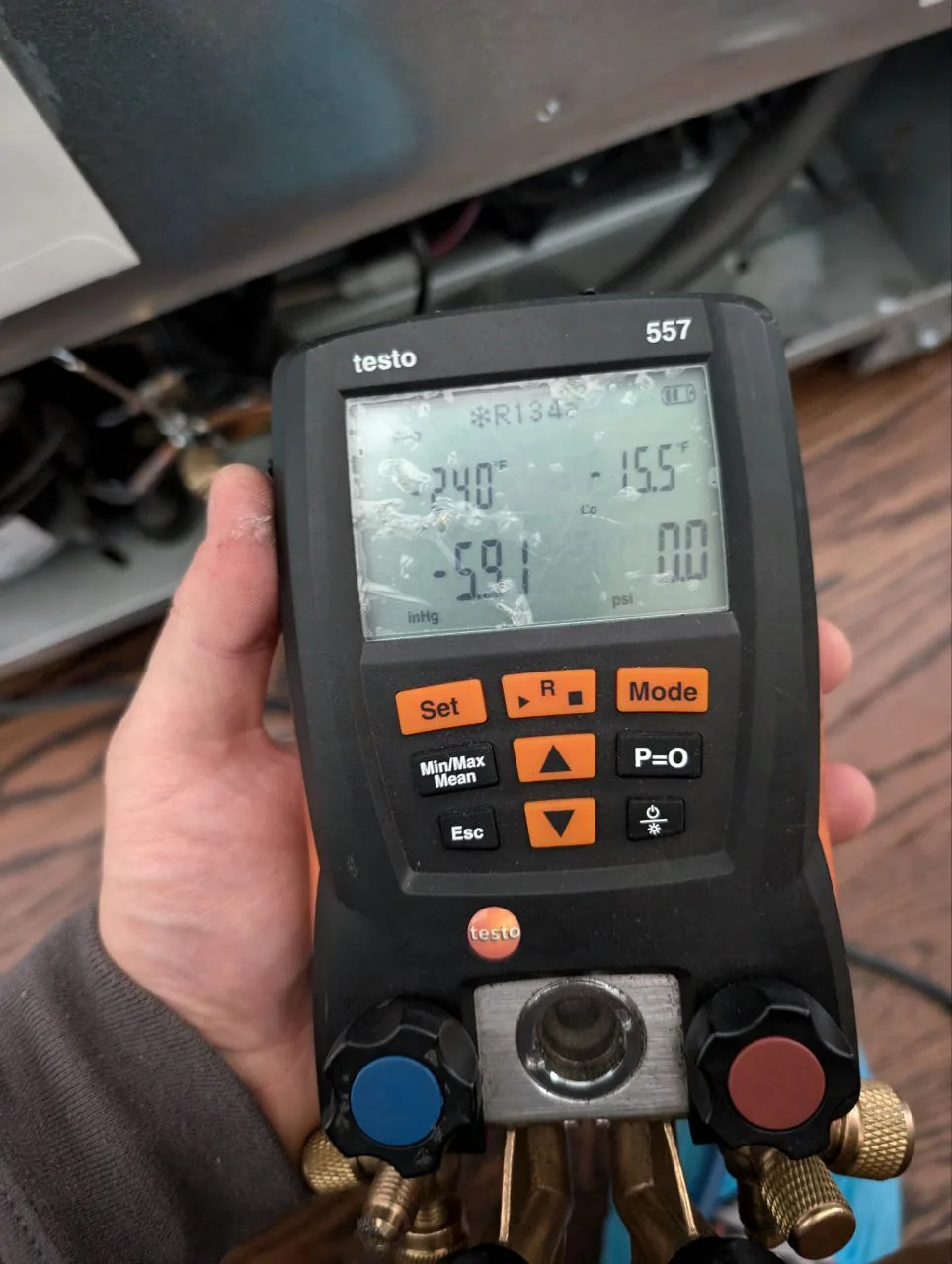
After the evaporator was replaced, the system would not hold vacuum. The discussion then considered another leak in the heat-exchanger tubing, but did not report where it was found or that the refrigerator returned to normal operation. The diagnosis is confirmed; the completed repair is not.